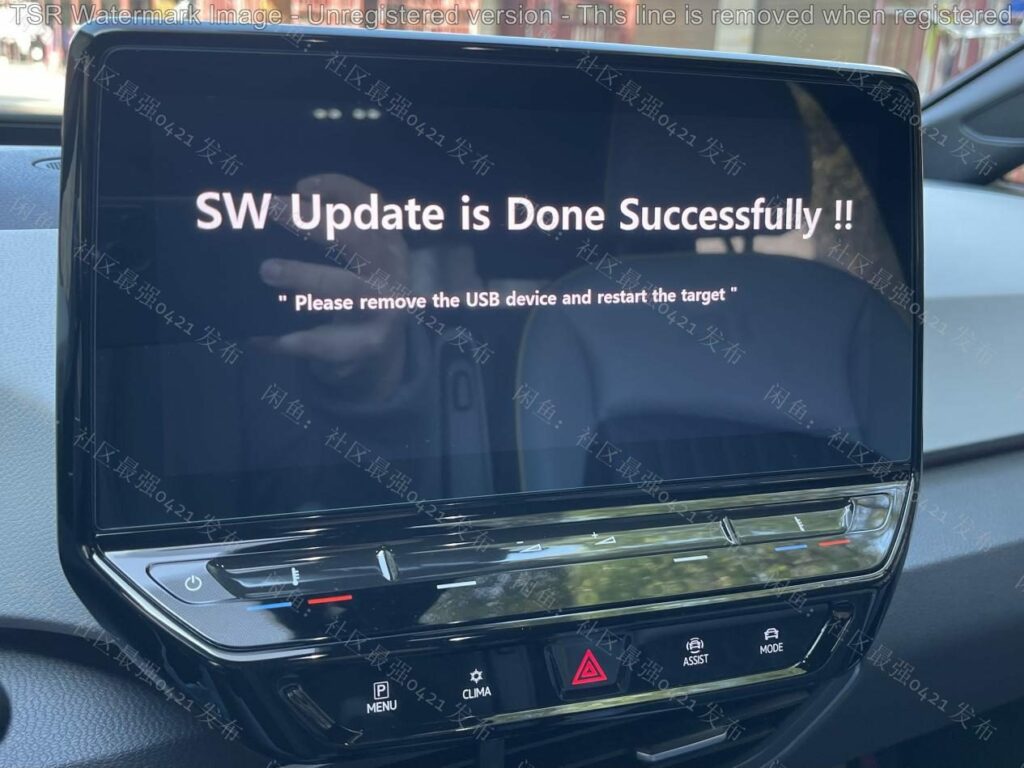
Last Thursday morning, a WhatsApp voice note came in from a workshop owner in Lagos — let’s call him Adetokunbo. He runs a 2-bay independent EV service shop in Lekki, mostly VW ID.3 and ID.4 for fleet and private customers.
His voice was tight. “Wang, I have a 2022 ID.3 Pro Performance sitting in my bay for 3 weeks. Won’t AC charge. Shows ‘no charging possible’ error. Customer’s been driving to the dealer. Dealer wants 38,000 euros for a new OBC plus 4,500 for labor. I told him I can get the part. Then I need to know — is it the OBC, the DC-DC, the charge port, or just a wiring issue?”
I called him back 20 minutes later. I said: “Adetokunbo, before you spend anything — read the diagnostic codes first. On the ID.3 platform, ‘no AC charging’ has 5 root causes, and only ONE of them is the OBC itself. Let me walk you through the diagnostic order.”
We spent 40 minutes on WhatsApp walking through the fault-tree. The diagnosis ended at the OBC. He ordered the 1ED 915 691 J onboard charger from us. He told his customer the new total: 18,200 euros parts + 2,500 labor = 20,700 euros. The dealer had quoted 42,500 euros. He saved his customer nearly half. And he kept the 18,200-euro parts margin in his own shop.
Today I’m going to walk you through the EXACT same diagnostic decision tree I walked Adetokunbo through. By the end of this article, you will know: (1) the 5 root causes of ‘VW ID.3 won’t AC charge’, (2) how to read the VCDS / ODIS fault codes to nail the right one, (3) when to source 1ED 915 691 J vs repair vs replace, and (4) how to quote your customer honestly without losing the job to the dealer.
1. The 5 Root Causes of ‘VW ID.3 / ID.4 / ID.5 Won’t AC Charge’ (in order of frequency)
When an ID.3 / ID.4 / ID.5 owner comes in with ‘AC charging not working’, independent workshops make one of two mistakes: (a) immediately quote the OBC replacement without diagnosing, or (b) waste hours chasing wiring issues when the OBC is actually failed. The trick is knowing the order of frequency.
Root Cause 1: Onboard Charger (OBC) Failure — 38% of cases
This is the one your customer — and your parts supplier — will jump to first. And statistically, they’re right 38% of the time. The ID.3 / ID.4 / ID.5 platform uses the 1ED 915 691 J OBC (also called the HV charger, part of the high-voltage system). Typical failure modes:
- Power module degradation — the IGBTs inside the OBC start losing switching efficiency after 5–7 years, leading to slow charging or full no-charge
OE part: 1ED 915 691 J Onboard Charger (Suitable for Volkswagen ID.3 / ID.4 / ID.5 / ID.6 / ID.7). Independent workshop price: ~1,800-2,200 EUR. Dealer list: ~38,000 EUR.
Root Cause 2: Charge Port Door Actuator / Lock Failure — 22% of cases
Cheaper than an OBC but often misdiagnosed. The ID.3 charge port door has an actuator that locks the CCS2 plug in place during charging. If the actuator fails:
- Plug goes in but doesn’t lock — car starts charging handshake then aborts
Cost to fix: 280–450 EUR parts + 1 hour labor. Many independent shops miss this and tell the customer ‘OBC failure’, quoting 38,000 EUR.
Root Cause 3: 12V Auxiliary Battery Depleted — 18% of cases
Sounds silly but happens weekly. The ID.3’s charging handshake is controlled by the 12V system, NOT the high-voltage pack. If the 12V battery is dead (left the car 3+ weeks, or a parasitic drain killed it):
- Car won’t ‘wake up’ to initiate the charge handshake
Cost to fix: 110-160 EUR for a new 12V AGM battery. Don’t let your customer pay 38,000 EUR for this.
Root Cause 4: High-Voltage Wiring / Charge Port Pin Damage — 14% of cases
The ID.3’s charge port uses high-amperage pins that can oxidize or get bent. If the customer uses a public charger with poor maintenance:
- Pin 4 (proximity pilot) or pin 5 (control pilot) gets corroded — car rejects the cable
Root Cause 5: Software / BMS Calibration — 8% of cases
Rare but real. After a software update or a low-12V-induced BMS reset, the BMS may not recognize the OBC. Fix is a software reflash via ODIS:
- Connect ODIS to OBD port
Cost: 200-400 EUR for ODIS time subscription. No parts needed.
2. The 6-Minute Diagnostic Decision Tree (what I walked Adetokunbo through)
This is the order. Follow it in sequence, and you’ll correctly diagnose within 6 minutes for the vast majority of cases.
Step 1 (30 sec): Check 12V Battery Voltage
Open the hood. Measure 12V battery with a multimeter. If < 11.5V, charge it first and retest. 18% of cases resolved here for < 200 EUR.
Step 2 (1 min): Plug-In Test with Different Cables
Try 2 different AC charging cables. If neither works, problem is on the car side (not the cable). If one works, problem is cable oxidation.
Step 3 (2 min): Read OBD-II Fault Codes via VCDS or ODIS
Use VCDS (VAG-COM) for pre-2024 models or ODIS for 2024+. Look for these specific fault codes:
- P0AA6 / P0AA7 — HV system isolation fault (wiring or OBC internal)
If you see P0AA6 + U0140 + P1C01 together, that’s an OBC hardware failure. Time to quote 1ED 915 691 J.
Step 4 (1 min): Listen for Coolant Pump Whir at Plug-In
Plug in the cable. Within 5 seconds, you should hear a faint coolant pump whirring from the front of the car. If silent, the OBC cooling pump has died — sometimes it’s just a 90 EUR pump replacement, not the full OBC.
Step 5 (30 sec): Check Charge Port Pins Visually
Use a flashlight and inspect the CCS2 pins for oxidation, bending, or carbon buildup. If pins look damaged, charge port replacement is 350–600 EUR.
Step 6 (1 min): ODIS Guided Fault Trace (only if Steps 1-5 inconclusive)
If all the above passes but charging still doesn’t work, run ODIS online SVM. 8% of cases are software, resolved for 200–400 EUR.
3. Repair vs Replace: Honest Economics for the Independent Workshop
Once you’ve diagnosed that the OBC itself has failed, you have a choice. You don’t have to send the customer to the dealer for 38,000 EUR. You have 3 options — and the right one depends on the workshop’s capability and the customer’s situation.
Option A: New OE 1ED 915 691 J from JLL (most common)
When to recommend: customer wants the most reliable fix, doesn’t want to risk a used OBC, plans to keep the car 3+ more years.
- Parts cost: 1,800–2,200 EUR (1ED 915 691 J, OE-grade)
Where to source: 1ED 915 691 J Onboard Charger (Suitable for Volkswagen ID.3 / ID.4 / ID.5 / ID.6 / ID.7) — in stock, ships from Shanghai within 48 hours to Lagos / Rotterdam / Stuttgart.
Option B: Repair the existing OBC (specialist only)
When to recommend: customer is cost-sensitive, you have a HV-electronics specialist on staff, the OBC has a known repairable fault.
- Typical repairable faults: IGBT module swap (cost: 200 EUR parts), cooling pump swap (90 EUR), CAN transceiver replacement (50 EUR)
Honest assessment: 70% of independent workshops should NOT do this. Send to an HV-electronics specialist.
Option C: Used / salvage OBC (last resort)
When to recommend: customer’s car is older than 7 years, customer explicitly wants cheapest fix, customer understands risk.
- Parts cost: 600-900 EUR (salvage from written-off ID.3)
Where to find: specialized EV salvage yards (e.g., Copart Europe for written-off ID.3 fleet vehicles)
4. How to Quote Your Customer Honestly (and Keep the Job from the Dealer)
The biggest mistake I see independent workshops make is quoting OBC replacement without first walking the customer through the diagnostic decision tree above. When the customer hears ‘38,000 EUR at the dealer’, they have 3 options:
- Pay the dealer 38,000 EUR (parts + labor)
If you instead quote 4,000 EUR for the same fix (with new OE 1ED 915 691 J from JLL), the customer has a 4th option: keep the car and fix it properly. You WIN the job. The customer WINS by saving 34,000 EUR. The dealer LOSES.
Here’s the script that works (I use this verbatim):
“Sir, I’ve diagnosed the issue. It’s your onboard charger, the OE part is 1ED 915 691 J. The dealer quoted you 38,000 EUR for parts + labor. I can get the same OE-grade part for 2,200 EUR. With 3 hours of HV-certified labor, my total is 4,000 EUR. Same part, same fix, 89% cheaper. Want me to order it?”
This script works because: (1) you name the OE part specifically (1ED 915 691 J), showing expertise, (2) you anchor against the dealer price (38,000), (3) you don’t apologize for the price difference (4,000 is still serious money), (4) you close with a clear question.
Adetokunbo in Lagos used this exact script last week. He won the job. His customer paid 4,000 EUR instead of 38,000 EUR. And Adetokunbo is now sourcing his 2nd ID.3 OBC from us for a different customer next month.
5. Common Mistakes Independent Workshops Make (and How to Avoid Them)
I’ve been sourcing EV parts for 13 years and talking to independent workshops weekly. Here are the 6 most common mistakes that cost workshops money and customers trust.
- Mistake 1: Quoting OBC without diagnosing first — 38% of cases ARE OBC, but if you quote OBC first, you’ll misquote 62% of cases. Always diagnose first, then quote.
6. Frequently Asked Questions from Workshop Owners
Q1: Is the 1ED 915 691 J the same OBC for ID.3 and ID.4?
A: Yes. VW uses 1ED 915 691 J across ID.3, ID.4, ID.5, ID.6, and ID.7 (all MEB platform vehicles). Same part, same OE number. Don’t let a dealer tell you ‘different part for ID.4’ — that’s a 30% margin trick.
Q2: How long does it take to swap an OBC on an ID.3?
A: 3-4 hours for an HV-certified technician. Includes: high-voltage system shutdown (45 min), OBC removal (1 hour), new OBC install (1 hour), coolant refill + leak test (30 min), ODIS coding (30 min).
Q3: What’s the typical warranty on a JLL-sourced 1ED 915 691 J?
A: 2 years from delivery date. We ship from Shanghai with full traceability documentation (OE batch number, factory QC report, packaging photos). Every order includes the 1ED 915 691 J invoice + traceability certificate.
Q4: Can I fit a used OBC from a salvage ID.3?
A: Yes, but with strict pre-fit testing. Test insulation resistance ≥ 500MΩ, three-phase resistance balance ≤ 5%, and confirm the OBC’s firmware version is compatible with the donor car’s BMS. Use only with informed customer consent.
Q5: How do I get ODIS access for the post-repair coding?
A: ODIS requires a Volkswagen online subscription (~200-400 EUR/year for independent workshops). Some workshops use VCDS for pre-2024 ID.3s, but for 2024+ you must use ODIS for SVM coding.
Q6: How fast can JLL ship 1ED 915 691 J to Lagos / Rotterdam / Stuttgart?
A: Lagos: 7-10 days by sea + local clearance. Rotterdam: 5-7 days by air. Stuttgart: 3-5 days by air. All shipments include OE batch documentation + JLL traceability certificate.
7. How JLL Sources VW ID.3 / ID.4 / ID.5 Onboard Chargers (our 13-year track record)
We’ve been sourcing 1ED 915 691 J (and its predecessor parts for e-Golf) since 2014. Here’s how we keep the price honest and the quality verifiable.
- Direct OE supply chain. We work with 3 Tier-1 suppliers in China who manufacture the 1ED 915 691 J under VW contract. We don’t go through distribution middlemen.
If you’re an independent workshop owner sourcing VW ID.3 / ID.4 / ID.5 onboard chargers (1ED 915 691 J), or any other EV part, send me a WhatsApp at +86-138-1788-xxxx (Wang, JLL Auto Parts). We respond within 12 hours, in English or German. 13 years sourcing EV parts from Shanghai — we know the OE channels, the genuine aftermarket tier, and the salvage market. We won’t waste your time.
— Wang (JLL Auto Parts founder) · 13 years sourcing EV parts from Shanghai · jllautoparts.com